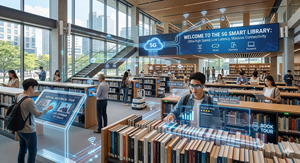
Libraries are no longer just quiet buildings filled with books. They have evolved into dynamic digital knowledge centers that provide access to information, technology, and collaborative learning spaces. As emerging technologies such as Artificial Intelligence (AI), the Internet of Things (IoT), and the Metaverse rapidly reshape how information is created and consumed, libraries must also adapt their infrastructure to keep pace with these innovations. One technology that is increasingly becoming essential in this transformation is 5G connectivity.
The fifth generation of wireless technology promises faster speeds, ultra-low latency, and the ability to connect millions of devices simultaneously. These capabilities are not merely upgrades from earlier networks; they fundamentally change how digital services operate. Many advanced technologies require real-time data processing, continuous connectivity, and high bandwidth, which older networks like 4G cannot always handle effectively.
In fact, global mobile connectivity is expanding rapidly. Reports indicate that mobile services already connect billions of people worldwide and generate trillions of dollars in economic value, with 5G expected to dominate future digital ecosystems. This massive growth demonstrates how critical next-generation connectivity has become for institutions that rely on digital information systems.
For libraries—especially academic and research libraries—5G opens doors to a completely new level of services. Imagine AI-powered discovery tools, IoT-based smart shelves, real-time analytics, immersive virtual learning environments, and collaborative metaverse spaces. All of these technologies require stable, high-speed networks capable of handling enormous volumes of data.
This article explores why 5G technology is becoming essential for modern libraries and how it supports emerging technologies like AI, IoT, and the Metaverse. It also examines the potential benefits, challenges, and future possibilities of integrating 5G into library systems.
The Digital Transformation of Libraries
From Traditional Libraries to Smart Knowledge Hubs
Libraries have undergone an incredible transformation over the last two decades. What once served primarily as physical repositories of books and journals has evolved into an ecosystem of digital collections, cloud services, collaborative learning spaces, and data-driven research tools. Today’s libraries support everything from digital scholarship and open access publishing to multimedia learning environments and remote access platforms.
This transformation did not happen overnight. The rise of digital databases, e-books, institutional repositories, and research analytics tools has significantly expanded the scope of library services. Academic libraries now manage vast collections of electronic resources and provide advanced tools for data analysis, citation management, and research collaboration. Librarians themselves are becoming information technologists, digital curators, and research facilitators.
However, the digital transformation of libraries is now entering a new phase. Technologies like Artificial Intelligence, IoT devices, augmented reality (AR), and immersive virtual environments are beginning to redefine how users interact with information. Students may soon explore historical archives through virtual reality environments, while researchers could use AI-driven discovery systems to analyze large datasets instantly.
These innovations require something fundamental: fast and reliable connectivity. Without powerful network infrastructure, advanced digital services cannot function smoothly. This is where 5G networks become a game-changing solution for libraries seeking to modernize their technology infrastructure.
The Role of Connectivity in Modern Libraries
Connectivity has always been the backbone of digital libraries. Every service—from accessing online journals to streaming educational videos—depends on network speed, reliability, and bandwidth capacity. As libraries adopt more advanced technologies, the demand for stronger connectivity grows exponentially.
Traditional networks like Wi-Fi and 4G often struggle to support high-bandwidth applications such as virtual reality simulations, real-time data analytics, and large-scale IoT systems. When hundreds or even thousands of users simultaneously access digital resources, network congestion can become a major problem.
5G technology addresses this challenge by providing significantly faster data transfer speeds and lower latency than previous wireless generations. Some estimates suggest that 5G can deliver speeds up to 10 gigabits per second, enabling seamless streaming, real-time collaboration, and immersive digital experiences.
In a library environment, this means students could download large datasets instantly, participate in virtual classrooms without lag, and interact with AI-powered systems in real time. Libraries could also deploy thousands of connected devices—from environmental sensors to smart catalog systems—without overloading the network.
Connectivity, therefore, is not just a technical requirement; it is a strategic foundation for the future of libraries.
Understanding 5G Technology
Key Features of 5G Networks
5G is more than just a faster version of 4G. It introduces new network architecture and capabilities that enable entirely new types of digital applications. These features are particularly important for environments like libraries where multiple users, devices, and systems interact simultaneously.
High Speed and Bandwidth
One of the most widely discussed advantages of 5G is its incredible speed. With data transfer rates reaching multi-gigabit levels, users can access cloud-based resources, video content, and large research datasets almost instantly. High bandwidth also allows multiple devices to use the network simultaneously without causing slowdowns.
For libraries, this means improved access to high-resolution digital archives, video lectures, and interactive educational platforms. Students can stream complex simulations or download large research materials without experiencing delays.
Ultra-Low Latency and Massive Connectivity
Latency refers to the time it takes for data to travel between devices. In previous networks, latency could cause noticeable delays in real-time applications. 5G dramatically reduces latency, enabling near-instant communication between systems.
This capability is critical for technologies like AI analytics, IoT sensors, and virtual reality environments, where real-time responses are essential. In addition, 5G networks can support a massive number of connected devices simultaneously, making them ideal for smart infrastructure systems.
Imagine a library building filled with smart sensors, automated shelving systems, AI-powered search tools, and digital learning platforms. 5G allows all these technologies to operate smoothly without network interruptions.
How 5G Enables Artificial Intelligence in Libraries
AI-Powered Library Services
Artificial Intelligence is already transforming libraries in remarkable ways. From automated cataloging systems to intelligent search engines, AI helps libraries manage information more efficiently and deliver better services to users.
With the help of AI, libraries can provide personalized recommendations, automated metadata generation, chatbots for user support, and predictive analytics for collection development. These systems analyze vast amounts of data to understand user behavior and improve resource discovery.
However, AI applications often require large-scale data processing and real-time communication with cloud servers. Without high-speed connectivity, these systems can become slow or inefficient.
5G provides the network capacity required for AI-driven library services to operate effectively. Studies show that AI integrated with 5G networks can significantly improve data transmission efficiency and real-time analytics capabilities.
For example, an AI-powered discovery system could analyze millions of research articles instantly and recommend relevant materials to users based on their academic interests.
Real-Time Data Processing and Smart Systems
AI systems thrive on data. In modern libraries, data comes from many sources: user searches, digital resource usage, sensor networks, and institutional repositories. The more data an AI system processes, the better it becomes at predicting user needs and optimizing services.
5G networks make it possible to process and analyze this data in real time. Librarians can monitor how users interact with digital resources, identify trends in research topics, and optimize library services accordingly.
Imagine a smart library where AI automatically adjusts digital collections based on user demand, recommends relevant research materials, and even predicts future information needs. With 5G connectivity, such systems can operate seamlessly and efficiently.
5G and the Internet of Things (IoT) in Smart Libraries
IoT Devices in Library Infrastructure
The Internet of Things (IoT) refers to networks of connected devices that collect and exchange data. In libraries, IoT devices can transform physical spaces into smart environments that enhance efficiency and user experience.
Examples of IoT applications in libraries include:
-
Smart shelves that track book movement
-
Environmental sensors that monitor temperature and humidity
-
Smart lighting systems that save energy
-
Occupancy sensors that track study space availability
-
Automated inventory systems
These devices continuously collect data and communicate with central management systems. However, a large network of IoT devices requires stable and high-capacity connectivity, which is where 5G becomes essential.
Benefits of IoT Integration in Libraries
5G networks enable IoT systems to operate efficiently by supporting massive device connectivity and real-time data exchange. This allows libraries to automate many operational tasks and improve building management.
For example, sensors could automatically detect empty study rooms and update availability in the library app, helping students find spaces quickly. Smart shelves could track book usage patterns, allowing librarians to optimize collection placement.
IoT also helps libraries reduce operational costs through energy-efficient building management systems. Lights, heating, and cooling can automatically adjust based on occupancy data collected from sensors.
The Metaverse and Immersive Library Experiences
Virtual Libraries and Digital Learning Spaces
The concept of the metaverse is gaining attention as a new frontier for digital interaction. In a metaverse environment, users can interact with information, people, and digital objects within immersive virtual worlds.
Libraries could create virtual reading rooms, digital exhibitions, collaborative research spaces, and immersive educational environments within the metaverse. Students could explore ancient manuscripts in a 3D virtual archive or attend lectures in a virtual auditorium.
These experiences require high bandwidth and extremely low latency to function smoothly. Without strong connectivity, virtual environments can experience delays and interruptions that break immersion.
Role of 5G in Enabling Immersive Technologies
5G networks provide the speed and responsiveness necessary for real-time interaction in virtual environments. High bandwidth allows detailed 3D graphics and virtual simulations to be transmitted quickly, while low latency ensures smooth user interaction.
Researchers highlight that immersive technologies rely heavily on fast, stable networks to render high-fidelity virtual environments without lag.
For libraries, this means the metaverse could become a powerful platform for digital education, cultural preservation, and collaborative research.
Key Benefits of 5G Adoption for Libraries
Faster Access to Digital Resources
The most immediate benefit of 5G for libraries is faster access to digital content. Users can download large research files, stream high-definition educational videos, and access cloud-based applications without delays.
Enhanced Collaboration and Remote Learning
5G also enables advanced forms of remote collaboration and online learning. Students and researchers can participate in virtual conferences, collaborative research projects, and immersive digital classrooms from anywhere.
Challenges Libraries May Face When Adopting 5G
Infrastructure and Cost Barriers
Implementing 5G infrastructure requires significant investment in network equipment, device upgrades, and technical expertise.
Security and Privacy Concerns
With increased connectivity comes greater responsibility to protect user data and digital infrastructure from cybersecurity threats.
The Future of Libraries in a 5G World
The future library will likely look very different from the libraries we know today. Instead of being primarily physical spaces for storing books, libraries will become intelligent digital ecosystems powered by advanced technologies.
5G connectivity will act as the foundation that enables AI, IoT, and immersive virtual environments to function seamlessly. With these technologies, libraries can provide more personalized services, interactive learning experiences, and data-driven research support.
As universities, governments, and communities continue to invest in digital infrastructure, libraries must ensure they remain at the forefront of technological innovation. By embracing 5G networks, libraries can transform themselves into smart knowledge hubs that empower the next generation of learners and researchers.
Conclusion
Libraries are entering an era where connectivity is as important as collections. Emerging technologies like Artificial Intelligence, the Internet of Things, and the Metaverse are redefining how knowledge is accessed, created, and shared. These technologies rely heavily on fast, reliable, and scalable network infrastructure, making 5G an essential component of future library ecosystems.
By adopting 5G technology, libraries can unlock powerful opportunities: smarter services, immersive learning environments, and efficient building management systems. While challenges such as infrastructure costs and cybersecurity must be addressed, the potential benefits far outweigh the obstacles.
The libraries of tomorrow will not simply store knowledge—they will connect people, technologies, and ideas in ways never before possible.
FAQs
1. Why is 5G important for modern libraries?
5G provides faster speeds, lower latency, and the ability to connect thousands of devices simultaneously, enabling advanced technologies like AI, IoT, and immersive learning platforms.
2. How can AI improve library services?
AI can automate cataloging, provide personalized recommendations, power chatbots, and analyze user data to improve resource discovery.
3. What role does IoT play in smart libraries?
IoT devices can monitor environmental conditions, track book movement, manage energy usage, and improve building efficiency.
4. Can libraries use the metaverse for education?
Yes. Libraries can create virtual learning environments, digital exhibitions, and collaborative research spaces in immersive virtual worlds.
5. What challenges might libraries face when adopting 5G?
The main challenges include infrastructure costs, device upgrades, cybersecurity risks, and staff training requirements.